 Email verification tool
The Data & Marketing Association says that email marketing still has one of the best returns on investment (ROIs) in digital marketing, with an average of $36–$40 for every $1 spent.
But that return on investment goes away quickly when your email list is full of fake, invalid, or risky addresses.
Every year, email lists lose about 20–30% of their subscribers because people change jobs, stop using their accounts, or use disposable emails. You could be sending thousands of emails to addresses that don't exist if you don't have an Email ID Validator.
What happened?
-
More bounce rates
-
Sender reputation hurt
-
Lower placement in the inbox
-
Money spent on marketing that didn't work
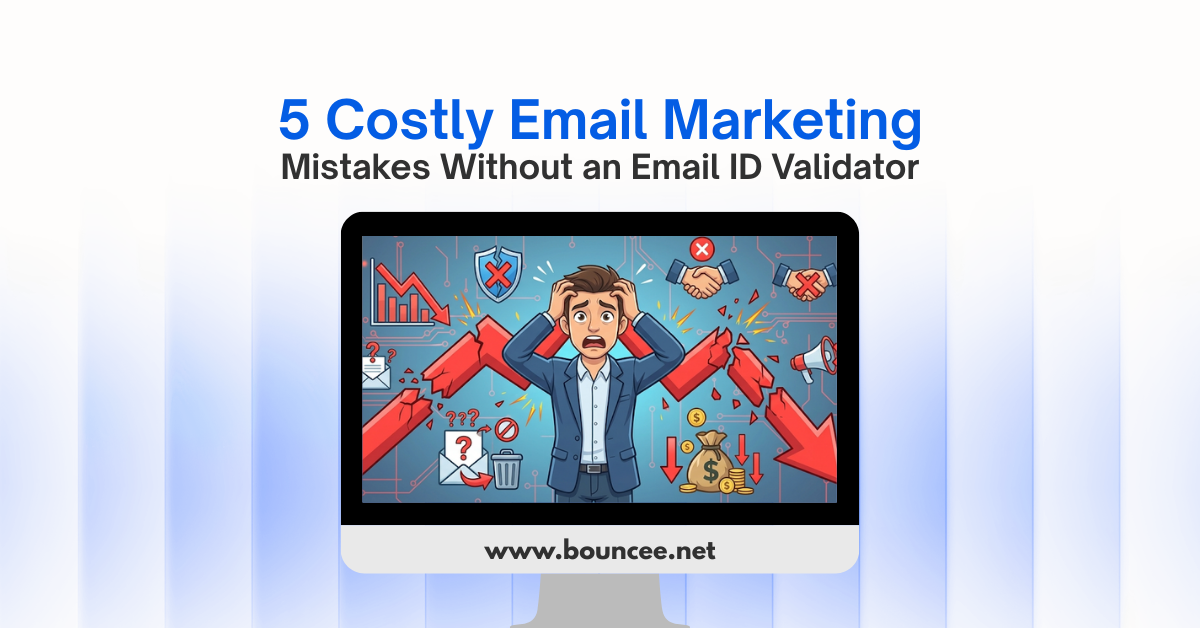
Let's look at five expensive email marketing mistakes that businesses make when they don't check their email addresses, and how to avoid them.
Table of Contents
-
Why the Quality of Your Email List Is More Important Than Ever
-
Sending emails to wrong addresses is mistake number one.
-
Mistake #2: Not paying attention to temporary and disposable emails
-
Mistake #3: Hurting Your Sender's Reputation
-
Mistake #4: Spending your marketing budget on leads that don't go anywhere
-
Mistake #5: Not keeping CRM systems' data clean
-
How an Email ID Validator Stops These Issues
-
How to Pick the Best Email Verification Tools
-
Best Ways to Keep Your Email List Clean in 2026
-
Conclusion
-
Frequently Asked Questions
Why the quality of your email list is more important than ever
In the last few years, email providers like Google and Microsoft have made their spam filters much stricter.
Placement in the inbox now depends a lot on:
Rate of Bounce
Spam filtering can kick in if the bounce rate goes above 2%.
Sender Reputation
Internet Service Providers (ISPs) keep track of how often your emails go to fake accounts.
Signals of Engagement
Open rates, replies, and spam complaints all affect whether or not emails get to inboxes.
An Email ID Validator makes sure that your campaigns only go to real, active addresses, which keeps these numbers safe.
Mistake #1: Sending Emails to Wrong Addresses
One of the most common mistakes marketers make is sending emails to addresses that don't exist.
Why Invalid Emails Show Up
Invalid emails get on lists by:
-
Mistakes when typing (example@gmial.com)
-
Signups that aren't real
-
Corporate emails that are no longer valid
-
Lists that were scraped or bought
How It Affects Bounce Rates
When emails keep bouncing:
-
ISPs mark your domain as dangerous
-
Campaign delivery rates go down
-
Emails that come in the future go to spam
How Email Address Verification Fixes It
Some of the checks that modern email verification tools do are:
Validation of the domain
Check SMTP
Finding out if a mailbox exists
This makes sure that only valid recipients get your campaigns.
Mistake #2: Not paying attention to temporary and disposable emails
Disposable email services are very popular right now.
People often use these addresses to:
-
Download content that is gated
-
Claim free trials
-
Don't open marketing emails
Why disposable emails hurt campaigns
They cause:
-
Leads that aren't real
-
Low rates of engagement
-
Bad conversion rates
A trend that is growing in 2026
More than 10% of people who sign up for things online now use temporary email services, according to studies.
Stopping people from signing up for disposable email
Advanced Email ID Validator systems can find disposable domains right away.
For instance, Bouncee helps stop:
-
Temporary domains
-
Emails based on roles
-
Addresses that are at risk
Mistake #3: Hurting the reputation of your sender
For email marketers, your sender reputation is like a credit score.
ISPs look at a number of signals:
Bounce Rate for Hard
If you get too many bad emails, it means your list management is bad.
Spam complaints
When people mark emails as spam, it hurts your credibility.
Spam Trap Hits
Some fake emails are made on purpose to catch spammers.
Statista's research shows that 45% of all emails sent around the world in the past few years were spam.
When your reputation is damaged, it's very hard to get your delivery back.
Mistake #4: Spending your marketing budget on leads that are no longer interested
Every email campaign costs money.
Costs include:
-
Subscriptions to email platforms
-
Tools for automating marketing
-
Designing campaigns and writing copy
Sending emails to wrong addresses wastes those resources.
Example Situation
Think about sending 100,000 emails:
-
15% of emails are invalid, which means 15,000 wasted sends.
-
Less likely to deliver to the rest of the contacts
Effect on Money
Less engagement also means:
-
Fewer sales conversions
-
Less return on investment from marketing
Email address verification makes sure that your budget only goes to real prospects.
Mistake #5: Not keeping your CRM data clean
Lists of email addresses are always changing.
People quit their jobs. Domains run out of time. Mailboxes are deleted.
If you don't clean your CRM often, it will become out of date.
Signs that your data hygiene is bad
-
A lot of people leave quickly
-
Low rates of opening
-
Subscribers who aren't interested
Best way to Do It
Experts say you should check email lists:
-
Before each campaign
-
After getting leads
-
Regularly in your CRM database
How an Email ID Validator Stops These Issues
An Email ID Validator checks the quality of your email lists.
Steps to Verify Your Key
-
Check the syntax
Checks to make sure the email format is correct.
-
Validation of the domain
Checks that the domain exists and can receive mail.
-
Checking the mailbox
Checks that the inbox is open without sending emails.
The Bouncee Advantage
Bouncee gives:
-
Checking a lot of email at once
-
Validation of APIs in real time
-
Finding disposable email addresses
-
Quick processing for big lists
This helps marketers keep their databases clean and running well.
How to Pick the Best Email Verification Tools
Not all tools are equally accurate.
When you are looking at email verification tools, you should look for:
Rate of Accuracy
High rates of finding fake emails.
Quickness
Verification in bulk without delays.
Ways to Integrate
Works with marketing and CRM platforms.
Validation in Real Time
Don't let people sign up with fake emails.
Best Ways to Keep Your Email List Clean in 2026
To keep your deliverability high, do the following:
Check Emails When You Sign Up
Forms should be checked in real time.
Lists that are clean all the time
Check every one to three months.
Keep an eye on bounce rates
Keep it under 2% to keep spam filters from blocking it.
Stay away from bought lists
They often have addresses that don't work or are spam traps.
Conclusion
One of the most costly mistakes marketers make is not verifying email addresses.
If you don't have an Email ID Validator, your campaigns could have
-
High bounce rates
-
Sender reputation hurt
-
Less engagement
-
Marketing budgets that go to waste
The answer is easy: check your email list before you send out campaigns.
Bouncee makes it easy to clean up your email list, get rid of risky addresses, and make sure your emails get delivered.
Try Bouncee today and get free email verifications to see how different it is.
Questions and Answers
1. What is a validator for email IDs?
An Email ID Validator checks to see if an email address is valid, active, and safe to send messages to.
2. What is the point of verifying email addresses?
It lowers bounce rates, makes it easier for emails to get to their destination, and protects the sender's reputation.
3. How often should you check your email lists?
Most experts say that you should check lists every one to three months.
4. Can checking email addresses make more people open them?
Yes. Sending emails only to people who can read them makes them more likely to respond.
5. What are the email addresses that you can throw away?
Temporary email accounts are made for a short time, usually to avoid getting marketing emails.
6. Do you need to check the bulk email?
Yes, especially for big email lists where bad addresses can make it much harder to deliver.
.png)